The active. The follicle. The formulation.
Topical Diazoxide vs. Minoxidil Sulfate:
Where Diazoxide Falls Short
What the evidence says about topical diazoxide, potassium channels and the next chapter of Sulfogenz Prime Ruby.
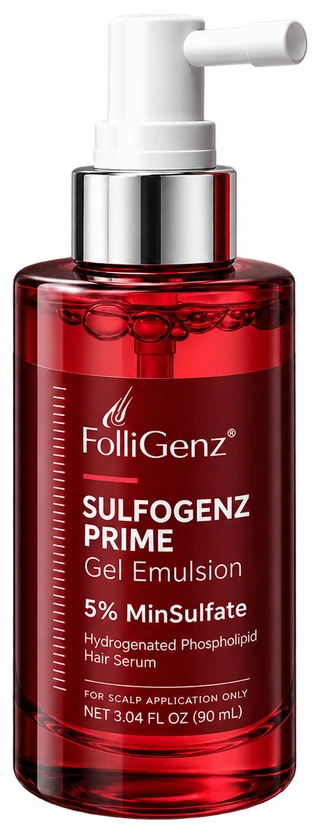 Formulation is part of the science.
Listen to this article
Choose your narrator and settle in.
Four English voices. Audio starts only when you press Play.
A conversation about this article
Make it a podcast. Ask your own questions.
Take the article into NotebookLM, now Gemini Notebook, and create a discussion in your own Google account.
Opens a separate Google window. You paste the source and generate the audio there.
Already downloaded your episode? Play it here.
Choose the audio file from your device. It stays on your device and is not uploaded to Folligenz.
A bottle can say “5%” and still leave a fairly important question unanswered: how much of that ingredient gets to the hair follicle in a useful form?
That question gets interesting when topical diazoxide is pitched as an alternative to minoxidil. The two drugs share a description, potassium channel opener, but that does not make them interchangeable. Diazoxide stumbled in a key hair-protein experiment. Its poor water solubility also led researchers to a 5% topical recipe containing 50% isopropyl alcohol, 10% benzyl alcohol and a strongly alkaline pH. That is a lot of formulation work before the drug even meets the scalp.
Minoxidil sulfate takes us in a more compelling direction. It is the active form the body makes from minoxidil, and research on its delivery gives us useful ways to think about getting that active to the follicle. It is also central to Sulfogenz Prime Ruby, Folligenz’s progression from an original lipid base to a hydrated gel emulsion. Here is the science behind that choice, in language you do not need a pharmacology degree to follow.
01 / Biology
Minoxidil sulfate: the active form behind a familiar name
When you apply minoxidil, enzymes in the skin and hair follicle help convert it into minoxidil sulfate. Those enzymes are called sulfotransferases. Their job is to attach a sulfate group to the molecule, a process called sulfation.
Think of it as an activation step. Minoxidil is the starting ingredient; minoxidil sulfate is the active form produced from it. Applying the sulfate directly is a way of starting after that conversion.
In “Minoxidil Sulfotransferase, a Marker of Human Keratinocyte Differentiation,” Johnson, Baker and Knight (1992) showed that this enzyme activity changed as human keratinocytes matured. Keratinocytes are cells found throughout the skin and hair follicle. The finding helps explain why the scalp’s own chemistry matters to minoxidil’s action. https://doi.org/10.1111/1523-1747.ep12499930
People do not all carry out that conversion equally. In “Novel enzymatic assay predicts minoxidil response in the treatment of androgenetic alopecia,” Goren et al. (2014) reported that an enzyme test using follicles helped predict treatment response in a preliminary retrospective study. Sulfation is one reason the same minoxidil bottle can produce different experiences for different people. https://pubmed.ncbi.nlm.nih.gov/24283387/
That makes direct sulfate delivery an attractive idea, particularly when conversion is limited. The next job belongs to the formulation: protect the active, distribute it evenly and help it reach the follicle.
In “Use of Minoxidil Sulfate versus Minoxidil Base in Androgenetic Alopecia Treatment: Friend or Foe?,” Dias, Miot, Trüeb and Ramos (2018) highlighted why that job deserves attention. Minoxidil sulfate behaves differently from minoxidil base in water and in skin, and simple aqueous solutions can have stability problems. This is exactly why carrier design matters. Choosing the active and choosing what carries it are two parts of the same decision. https://doi.org/10.1159/000488011
02 / Mechanism
Same drug category, different conversations with the follicle
Picture a potassium channel as a tiny gate in a cell’s surface. Opening it lets potassium ions move and can change how the cell responds to signals. Drugs that encourage those gates to open are called potassium channel openers, or PCOs. Minoxidil and diazoxide both belong to that broad category.
But follicles contain different gates in different places. ATP-sensitive potassium channels, or KATP channels, respond to the cell’s energy status. Each combines a pore-forming part, called Kir, with a regulatory part called SUR, short for sulfonylurea receptor. You do not need to memorize the names. The useful point is that the combination affects how the channel responds to a drug.
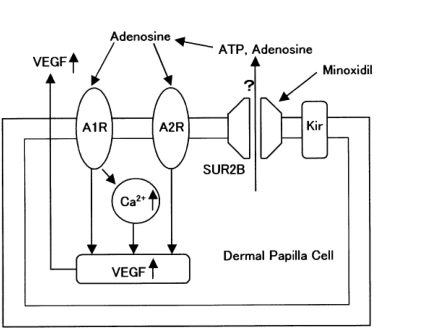
In “Human hair follicles contain two forms of ATP-sensitive potassium channels, only one of which is sensitive to minoxidil,” Shorter et al. (2008) identified two combinations in human follicles, including a minoxidil-sensitive form in the dermal papilla and sheath. The dermal papilla is a cluster of cells at the follicle’s base that helps coordinate hair growth. That is an especially interesting place to find a drug-responsive channel. https://doi.org/10.1096/fj.07-099424
| Combination | Follicular location | What it means |
|---|---|---|
| Kir6.1 / SUR2B | Dermal papilla and dermal sheath | The minoxidil-responsive combination discussed by the authors. |
| Kir6.2 / SUR1 | Epithelial matrix | A different combination, described as insensitive to minoxidil. |
| SUR2A | Not detected in the examined follicular populations | SUR2B was the relevant SUR2 form identified here. |
In one culture condition, without added insulin and hydrocortisone, minoxidil helped follicles remain in anagen, their growing phase. A channel blocker called tolbutamide opposed that effect. Results differed when the culture supplements were present, which gives researchers a useful clue about the surrounding biology.
The useful translation: minoxidil’s relationship with the follicle is more specific than “it opens a channel.” Which channel, in which cells, under which conditions all matter. Sharing the PCO label is not enough to make diazoxide an equivalent substitute.
Shorter’s paper examined channel biology rather than a direct minoxidil-versus-diazoxide contest. It also discussed growth responses to other openers in earlier follicle research. Both channel forms can have biological roles; the interest here is the identifiable minoxidil-responsive machinery in human follicles.
Adenosine: another part of the message
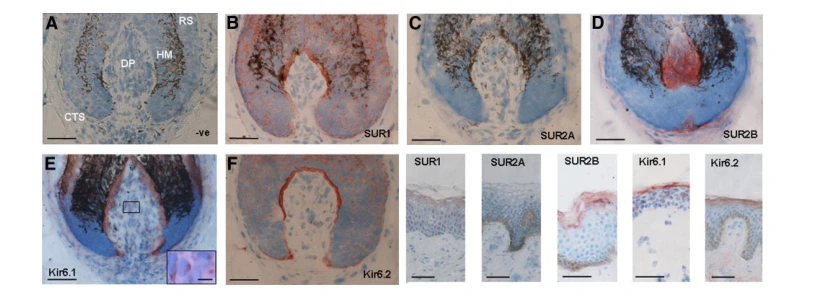
In “Minoxidil-Induced Hair Growth is Mediated by Adenosine in Cultured Dermal Papilla Cells: Possible Involvement of Sulfonylurea Receptor 2B as a Target of Minoxidil,” Li et al. (2001) studied cultured dermal papilla cells using the active sulfate. They detected SUR2B and found that blocking adenosine receptors reduced calcium and VEGF responses. VEGF is a signaling protein involved in blood-vessel biology. https://doi.org/10.1046/j.0022-202x.2001.01570.x
In everyday terms, the authors were tracing a conversation between the drug, the cell and growth-related signals. Their proposed pathway connects minoxidil’s action with adenosine, a molecule cells use in signaling. The diagram below shows how those pieces may fit together.
Why the type of test matters
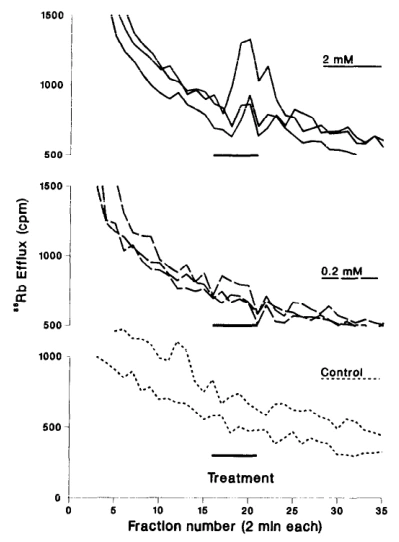
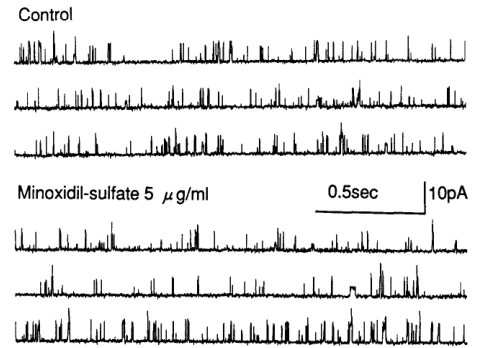
Earlier experiments help make sense of that specificity. In “Potassium Channel Conductance as a Control Mechanism in Hair Follicles,” Buhl et al. (1993) found no measurable increase in rubidium efflux, a laboratory proxy for ion movement, with minoxidil or its sulfate under the conditions tested. In “Effect of minoxidil sulfate and pinacidil on single potassium channel current in cultured human outer root sheath cells and dermal papilla cells,” Nakaya et al. (1994) found no activation of the calcium-sensitive currents they recorded in cultured follicular cells. Those were a different channel type from the ATP-sensitive channels discussed above. https://doi.org/10.1111/1523-1747.ep12363290 https://doi.org/10.1016/0923-1811(94)90041-8
A channel-current test asks a different question from a growing-follicle experiment. Keeping those questions separate helps explain why “another channel opener” is a thin argument for replacing minoxidil.
03 / The comparison
The experiment where diazoxide did not deliver
In “Potassium Channel Conductance: A Mechanism Affecting Hair Growth both In Vitro and In Vivo,” Buhl et al. (1992) compared several openers in cultured mouse vibrissae, the follicles that produce whiskers. The researchers measured incorporation of radiolabeled cysteine into hair shafts, an indicator of hair-protein synthesis. https://doi.org/10.1111/1523-1747.ep12499788
Diazoxide was the only tested opener comparator without a significant stimulatory result at any tested dose. Minoxidil, pinacidil, P-1075, cromakalim, nicorandil and RP-49,356 each had at least one significant result. Diazoxide was tested at 0.01 and 0.1 mM; poor solubility prevented testing the higher concentrations the investigators wanted.
Explore the evidence
Where diazoxide fell short
Buhl et al. (1992), Figure 2. Radiolabeled cysteine incorporation into cultured mouse vibrissa hair shafts over a 72-hour experiment. Six separate experiments normalized to their minoxidil reference; a representative negative control is shown. This measures hair-protein synthesis, not human regrowth.
Hover, tap or focus a bar for details. Scroll sideways to inspect every compound on smaller screens.
Select a bar to read its value and source annotation.
Concentrations in mM. Dashed line: 1 mM minoxidil reference, not untreated control. Upper whiskers: approximate SEM. * p < 0.05 versus the corresponding negative control, as marked in the original.
| Compound | Dose (mM) | Value (% of 1 mM minoxidil response) | upper SEM | Source annotation |
|---|---|---|---|---|
| Minoxidil | 0 | ≈ 52 | ≈ 4 | No significance mark |
| Minoxidil | 1 | ≈ 100 | ≈ 9 | * p < 0.05 vs control |
| Pinacidil | 0.01 | ≈ 59 | ≈ 10 | No significance mark |
| Pinacidil | 0.1 | ≈ 79 | ≈ 14 | No significance mark |
| Pinacidil | 1 | ≈ 91 | ≈ 13 | * p < 0.05 vs control |
| Pinacidil | 10 | ≈ 71 | ≈ 3 | No significance mark |
| P-1075 | 0.001 | ≈ 56 | ≈ 14 | No significance mark |
| P-1075 | 0.01 | ≈ 126 | ≈ 29 | * p < 0.05 vs control |
| P-1075 | 0.1 | ≈ 47 | ≈ 10 | No significance mark |
| Diazoxide | 0.01 | ≈ 44 | ≈ 10 | No significance mark |
| Diazoxide | 0.1 | ≈ 68 | ≈ 2 | No significance mark |
| Cromakalim | 0.003 | ≈ 58 | ≈ 15 | No significance mark |
| Cromakalim | 0.025 | ≈ 91 | ≈ 26 | * p < 0.05 vs control |
| Cromakalim | 0.13 | ≈ 82 | ≈ 15 | * p < 0.05 vs control |
| Cromakalim | 0.25 | ≈ 75 | ≈ 10 | No significance mark |
| Nicorandil | 0.05 | ≈ 73 | ≈ 8 | No significance mark |
| Nicorandil | 0.25 | ≈ 88 | ≈ 11 | * p < 0.05 vs control |
| Nicorandil | 0.5 | ≈ 131 | ≈ 4 | * p < 0.05 vs control |
| RP-49,356 | 0.05 | ≈ 54 | ≈ 9 | No significance mark |
| RP-49,356 | 0.5 | ≈ 47 | ≈ 8 | No significance mark |
| RP-49,356 | 5 | ≈ 111 | ≈ 6 | * p < 0.05 vs control |
Reconstructed from Buhl et al. (1992), Figure 2. All 21 bars, tested concentrations and recoverable significance annotations are retained. Heights and upper SEM are approximate readings of the scan, not recovered raw data.
Inspect the original comparison graph
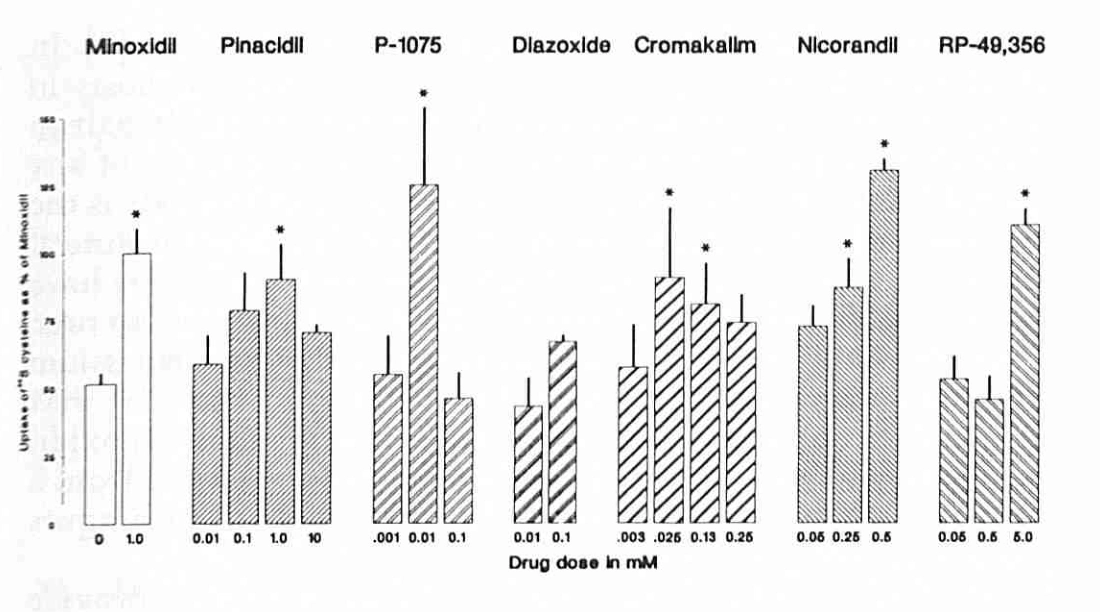
What happened? The researchers asked whether follicles made more hair protein. Minoxidil produced a significant response at tested doses. Diazoxide did not, and its solubility stopped the researchers from simply increasing the dose. Here, the chemistry problem and the performance problem met in the same experiment.
The bars compare each dose with its corresponding untreated control, using minoxidil as the reference scale. Dose ranges differed, and minoxidil sulfate was not a separate group. This is a specific, useful result about hair-protein synthesis.
Cell activity is one step. Making hair is another.
In “Potassium Channel Openers Stimulate DNA Synthesis in Mouse Epidermal Keratinocyte and Whole Hair Follicle Cultures,” Harmon, Lutz and Ducote (1993) found that diazoxide, minoxidil, pinacidil and cromakalim all stimulated DNA synthesis in mouse whole-follicle cultures. Their maximum responses were comparable, approximately 150-170% of control. Diazoxide reached a half-maximal response at a lower concentration than minoxidil in that assay. That concentration is called the EC50. https://doi.org/10.1159/000211131
Explore the evidence
A different assay, a different ranking
Harmon et al. (1993), results accompanying Figure 4. Concentration producing half-maximal stimulation of DNA synthesis in four-day mouse vibrissa culture. Lower means greater potency in this assay, not better clinical hair growth. A new summary of reported EC50 values, not a tracing of the dose-response curves; no error estimates were reported for these EC50 values.
Hover, tap or focus a bar for details.
Select a bar to read its value and source annotation.
| Compound | Value (EC50 (µM)) |
|---|---|
| Cromakalim | 20 |
| Pinacidil | 40 |
| Diazoxide | 100 |
| Minoxidil | 200 |
Inspect Harmon’s original dose-response curves
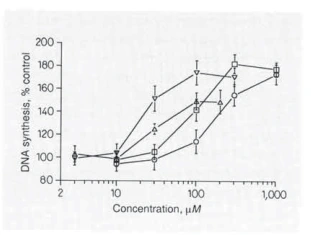
DNA synthesis tells us about cells preparing to multiply. Buhl’s cysteine test tells us about protein going into hair shafts. Diazoxide’s positive result in the first kind of test does not rescue its negative result in the second. It gives us a mixed laboratory picture, rather than a convincing reason to call diazoxide an upgrade.
04 / From culture to animals
Minoxidil’s longer track record in the macaque studies
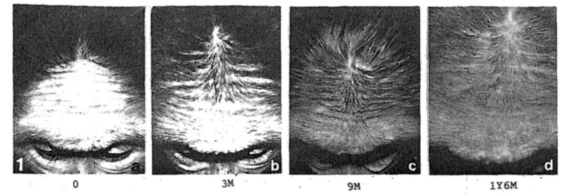
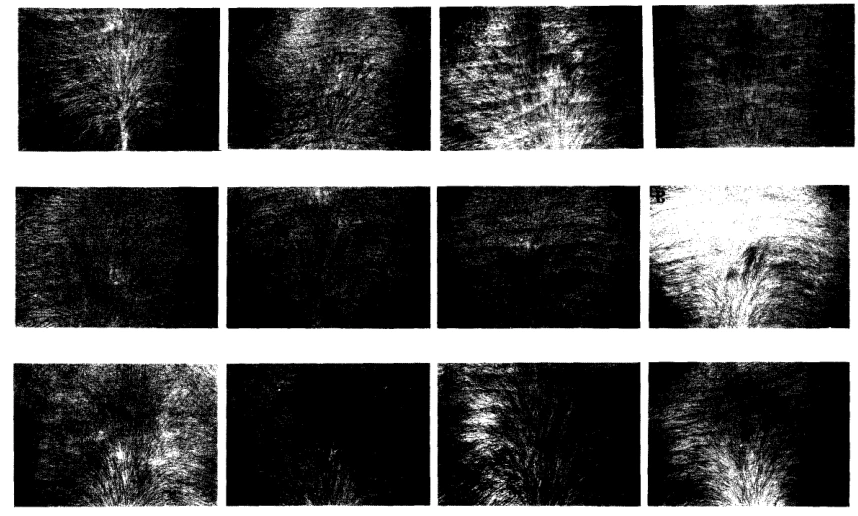
Moving from a dish to an animal gives researchers a fuller picture: visible hair, repeated application and changes over time. In “Action of topical minoxidil in the bald stump-tailed macaque,” Uno, Cappas and Brigham (1987) followed a broader minoxidil programme than the later diazoxide experiment, with two concentrations and treatment extending over years. In “The effects of topical diazoxide on hair follicular growth and physiology of the stumptailed macaque,” Uno, Kemnitz, Cappas, Adachi, Sakuma and Kamoda (1990) examined five diazoxide-treated animals and two controls. https://doi.org/10.1016/S0190-9622(87)70084-X https://doi.org/10.1016/0923-1811(90)90130-6
| Study feature | Minoxidil · Uno et al., 1987 | Diazoxide · Uno et al., 1990 |
|---|---|---|
| Animals | 18-animal programme. The 5% arm included eight treated animals and four controls; six animals were described in the 2% programme. | Seven animals: five treated and two vehicle controls. |
| Population | 5% treated group: four adults aged 6-25 and four periadolescents aged 3-4.5, with differing baseline baldness. | Whole cohort: two males and five females, aged 4-20. Treated animals: two males and three females, aged 5-9. |
| Application | 0.2 mL of 5% solution, reported as 10 mg, over about 50 cm², five days per week. A separate 2% evaluation. | 0.2 mL of 5% solution over about 50 cm², five days per week. Percentage basis not stated. |
| Vehicle | For 5%: propylene glycol 50%, ethanol 30%, water 20%. The 2% account includes propylene glycol or liposome bases. | Isopropyl alcohol 50%, benzyl alcohol 10%, dipropylene glycol 4%, two surfactants, sodium hydroxide; pH 10.0-10.5. |
| Time course | Visible growth in most initially balding 5% animals by three months; one adult responded at ten months. Five animals continued to 3 years 8 months. The 2% response was more modest by five months. | Sixteen months of active treatment. Gross changes became apparent around five to six months; three animals had earlier, stronger responses and two later, smaller responses. Withdrawal follow-up to six months. |
| Outcomes | Photographs, follicle measurements and DNA labeling supported enlargement and continued growth. Withdrawal caused regression. | All five treated animals showed thickening and maintenance. Follicle measurements supported enlargement and anagen progression. Controls lacked consistent improvement; withdrawal caused regression. |
| Monitoring | No reported local or systemic pathological effects. Serum minoxidil averaged 15 ng/mL after a single 10 mg application, demonstrating systemic exposure. | No reported abnormality in monitored cardiovascular, androgen, glucose/insulin or hematology measures, or local histopathology. Small and incompletely sampled safety assessments; no topical pharmacokinetics. |
For minoxidil, visible growth appeared in most initially balding animals in the 5% group by three months, and five animals continued treatment for three years and eight months. That longer follow-up adds substance to the story: researchers could observe growth, maintenance and what happened after withdrawal.
Diazoxide also produced growth in all five treated animals, while the two controls lacked consistent improvement. Gross changes became apparent around five to six months, with less uniform response timing. Because the studies used different animals, vehicles and schedules, those dates are observations rather than a speed contest. Minoxidil’s advantage here is the breadth and duration of the evidence.
05 / Formulation
Diazoxide’s awkward problem: getting it into solution
This is where the diazoxide pitch becomes much less appealing. The active is poorly soluble in water. In Uno’s 1990 study, the 5% topical came with a substantial supporting cast: 50% isopropyl alcohol, 10% benzyl alcohol, 4% dipropylene glycol, two surfactants and a final pH of 10.0-10.5. “5% diazoxide” tells you very little about that experience on its own.
| Component | Reported amount | Formulation consideration |
|---|---|---|
| Diazoxide | 5% | High loading makes maintenance of a dissolved, available fraction important. |
| Isopropyl alcohol | 50% | A large volatile solvent fraction; evaporation changes the remaining vehicle. |
| Benzyl alcohol | 10% | A substantial additional solvent burden to evaluate for repeated scalp exposure. |
| Dipropylene glycol | 4% | Another solvent helping the formulation carry the drug. |
| Sodium dodecyl sulfate | 0.06% | An anionic detergent. Barrier effects depend on the complete formulation and exposure. |
| Lauryldimethylamine oxide | 0.187% | A second surfactant; its interaction with the other ingredients matters. |
| 10% sodium hydroxide solution | Quantity sufficient | This is the adjusting solution, not 10% sodium hydroxide in the finished product. |
| Water | To 100 | Completes the vehicle. |
| Final pH | 10.0-10.5 | Strongly alkaline relative to the normally acidic skin surface. |
The paper does not specify the percentage basis. For a 5% weight/volume product, 1 mL would contain 50 mg of applied drug; the amount absorbed would be a separate measurement. These macaques received 0.2 mL per application.
A clear bottle is not the finish line
The diazoxide drug label describes its poor water solubility. Raising the pH can help a weakly acidic drug dissolve by increasing its ionized fraction, the proportion carrying an electrical charge. But changing that charge also changes how the drug partitions into the skin’s lipid-rich barrier. Getting more into solution and getting more to a follicle are different jobs. https://dailymed.nlm.nih.gov/dailymed/getFile.cfm?setid=c0237320-2d3f-4907-a4d3-08f138aa4ca8
Then the solvent starts to evaporate. As isopropyl alcohol leaves the scalp, the remaining liquid changes composition. Contact with the acidic skin surface can also change local pH. Both raise practical questions about whether diazoxide stays dissolved or begins to crystallize. These are formulation risks to test; precipitation was not measured in Uno’s experiment.
The scalp has to live with the solvent system
A highly alkaline mixture with this much alcohol and two surfactants deserves scrutiny for dryness, irritation and barrier effects. Skin normally has an acidic surface. In “Barrier recovery is impeded at neutral pH, independent of ionic effects: implications for extracellular lipid processing,” Mauro et al. (1998) showed that the pH environment can affect barrier recovery. The combination of ingredients matters, not just any one percentage. https://pubmed.ncbi.nlm.nih.gov/9617442/
There is also a distinction between irritation, a direct reaction to an exposure, and allergy, an immune response in a sensitized person. In “Allergic contact dermatitis caused by isopropyl alcohol: a missed allergen?,” García-Gavín et al. (2011) documented allergic reactions in a selected group of patients undergoing patch testing. That establishes a potential allergy concern, not a prediction that every user will react. https://pubmed.ncbi.nlm.nih.gov/21679194/
In “Effect of different alcohols on stratum corneum kallikrein 5 and phospholipase A2 together with epidermal keratinocytes and skin irritation,” Cartner et al. (2017) found different tolerance profiles for different alcohols under frequent forearm application. Isopropanol was less well tolerated than ethanol in that experiment. Those exposures were much more frequent than a scalp routine, so they support concern about the solvent choice rather than a measured irritation rate for Uno’s recipe. Uno reported no local histopathological changes in the small macaque study. https://doi.org/10.1111/ics.12364
How much drug remains dissolved in the vehicle.
How much enters or passes through the skin.
How much reaches and remains in the relevant follicular tissue.
Here is the practical objection: a formula can keep a difficult ingredient dissolved and still leave you with questions about scalp comfort and delivery. The 1990 diazoxide recipe carries all three questions at once. A headline concentration does not answer them.
Alcohol itself is not a verdict on a product. Minoxidil vehicles can contain alcohol too, as can Prime Ruby’s supplied development formulation. The criticism is this particular diazoxide recipe’s solvent load, alkaline pH and surfactant combination. The sources reviewed here did not establish a gentler 5% diazoxide topical with convincing human hair-growth evidence. Alternative carriers remain a research possibility, rather than a demonstrated answer in these studies.
There is more to diazoxide than hair
The systemic drug suppresses insulin release, raises blood glucose and can cause fluid retention. Those are documented effects of systemic diazoxide, not adverse events demonstrated by these five topical-treated macaques. They explain why measuring absorption matters when developing a scalp product. For us, the combined evidence is a weak case for treating topical diazoxide as an upgrade on minoxidil.
Liposomal minoxidil sulfate: give the active a place to stay
Now for the more interesting formulation question: can a carrier help minoxidil sulfate collect around the follicle instead of simply passing through the skin?
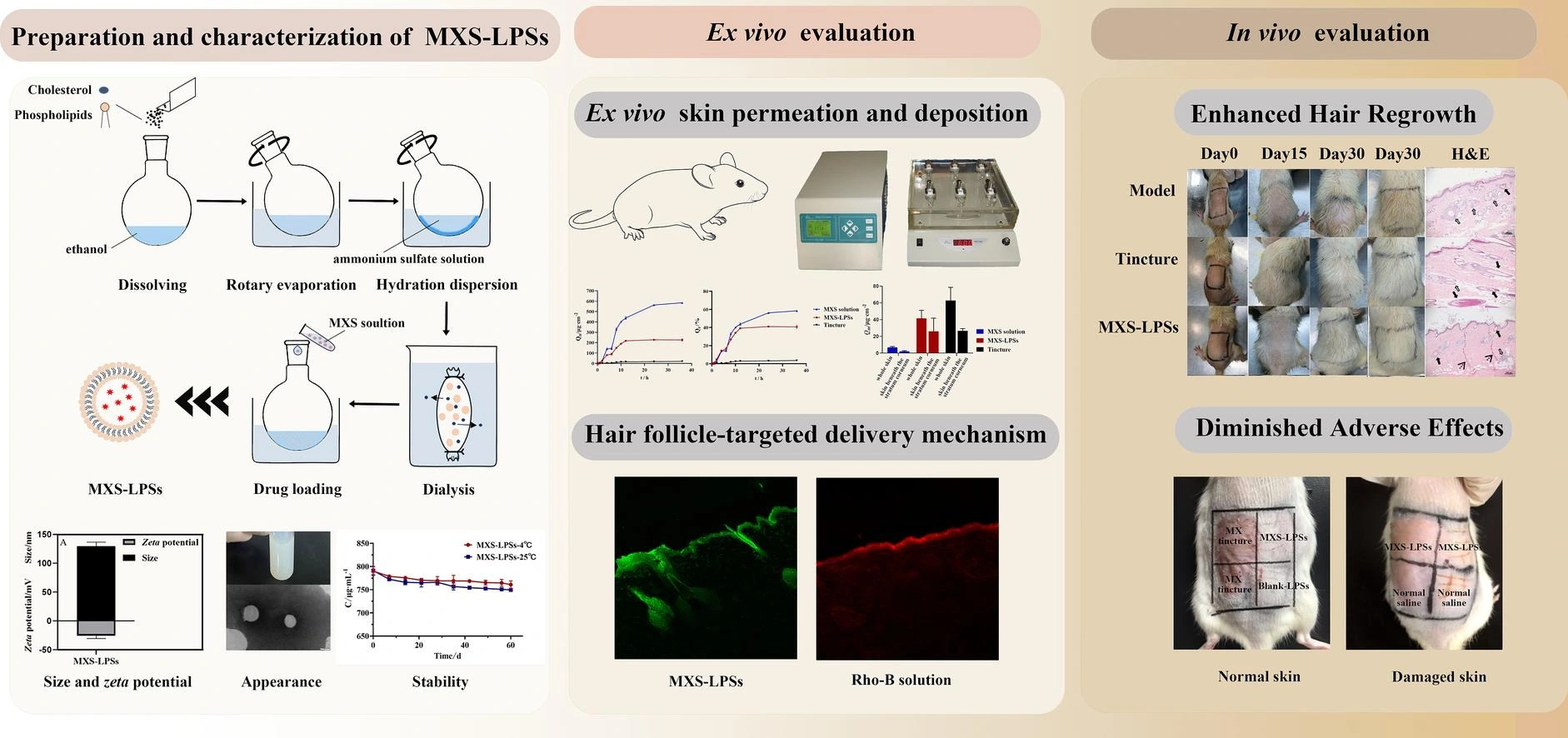
In “Liposomes enhance the hair follicle delivery of minoxidil sulfate with improved treatment of androgenic alopecia,” Shan et al. (2025) explored that idea with liposomes, tiny vesicles surrounded by a lipid bilayer. Think of them as small compartments that carry the active ingredient. The researchers reported an average vesicle size of 129.46 ± 7.04 nm and encapsulation efficiency of 92.72 ± 0.75%. In plain language, roughly 93% of the drug was encapsulated in their optimized preparation. https://doi.org/10.1016/j.ijpharm.2025.125642
The rat-skin experiment makes an important distinction. Over 36 hours, the liposomes allowed more drug through the skin than minoxidil tincture, but less than free minoxidil sulfate solution. At the same time, they changed where the drug accumulated within the skin. For a follicular treatment, location is a useful part of the result.
Explore the evidence
More permeation is not the same as better targeting
Shan et al. (2025), abstract. Ex vivo rat-skin Franz diffusion data. The liposomes passed less drug through skin than free sulfate solution. Whiskers reproduce the published upper ± quantities; the available abstract does not identify SD or SEM. Different formulations and active forms are compared, not molar-equivalent clinical doses.
Hover, tap or focus a bar for details.
Select a bar to read its value and source annotation.
| Compound | Value (36-hour permeation (µg/cm²)) | reported ± quantity |
|---|---|---|
| Sulfate liposomes | 225.98 | 11.53 |
| Minoxidil tincture | 19.79 | 1.97 |
| Sulfate solution | 584.42 | 2.33 |
The fraction of total skin-deposited drug found below the stratum corneum, the skin’s outer barrier, was 59.80 ± 26.27% for the liposomes, 43.18 ± 6.58% for minoxidil tincture and 32.55 ± 1.61% for sulfate solution. Microscopy added a more targeted observation: the liposomal carrier produced greater accumulation in hair follicles than free sulfate solution.
More going through is not always the goal. For a scalp treatment, we are interested in getting the active to useful tissue and keeping it there. A carrier that changes where the drug stays can be more interesting than one that simply increases total absorption.
A reservoir for the active ingredient
The phospholipid-and-cholesterol vesicles were designed to hold minoxidil sulfate and release it over time. The optimized preparation had a zeta potential of −25.57 ± 4.79 mV, a measure of surface charge, and a drug loading of 2.80 ± 0.12%. The authors described evenly dispersed vesicles and good stability at 4°C.
In their rat model of androgenic alopecia, the liposomal sulfate stimulated hair regrowth more effectively than minoxidil tincture, with reduced irritation and sensitization also reported. The graphical abstract brings the story together: preparation on the left, skin delivery in the middle, and animal regrowth and tolerance assessments on the right.
This is the appeal of minoxidil sulfate formulation research: start with the active metabolite, then use the carrier to improve how it is handled and delivered. That gives formulation development a clear purpose.
06 / Sulfogenz Prime Ruby
Sulfogenz Prime Ruby: the active and the application, considered together
Folligenz has developed Sulfogenz from its original lipid-based formulation into Sulfogenz Prime Ruby’s hydrated gel emulsion. Minoxidil sulfate remains at the center of the idea. The evolution is in how the formulation carries it, spreads and behaves during application.
A scalp product has a fairly demanding job. You want to place it accurately, work it through the treatment area and avoid spending the next few minutes chasing liquid down your forehead. Texture is part of that experience. A gel network gives a formulation structure; an emulsion brings water and lipid components together in the same vehicle.
For Prime Ruby, the development priorities are stability, even distribution of the active and useful local delivery, alongside a spreadable texture. The hydrated gel emulsion is the next step in that work: a formulation built around the active sulfate and the practical business of applying it.
Why a gel’s feel is part of its design
In “Novel Gel Microemulsion as Topical Drug Delivery System for Curcumin in Dermatocosmetics,” Scomoroscenco et al. (2021) explored how polymers changed a curcumin microemulsion’s rheology, the technical word for how a material flows. The gels showed shear-thinning behavior: they became easier to move when force was applied. Polymer choice also influenced how the active passed through a test membrane. https://doi.org/10.3390/pharmaceutics13040505
You can understand the appeal without memorizing a flow curve. A structured topical can hold its shape at rest and become easier to spread as you work it across a surface. Choosing that structure involves balancing flow, ingredient compatibility and release. The curcumin experiments provide a useful look at those formulation decisions.
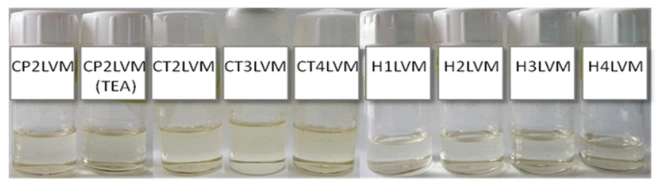
A quick translation of the formulation names
A liposome is a small compartment with a lipid bilayer. An emulsion contains droplets of one liquid dispersed in another. A gel emulsion adds a gel network to give the mixture structure. A microemulsion is a particular thermodynamically stable system. These names describe different arrangements of ingredients, each with its own formulation possibilities.
Folligenz describes Prime Ruby as a hydrated gel emulsion, with hydrogenated phospholipid liposomes referenced in its product identity. The gel-emulsion description explains the overall vehicle: water and lipid components brought together in a structured, spreadable format.
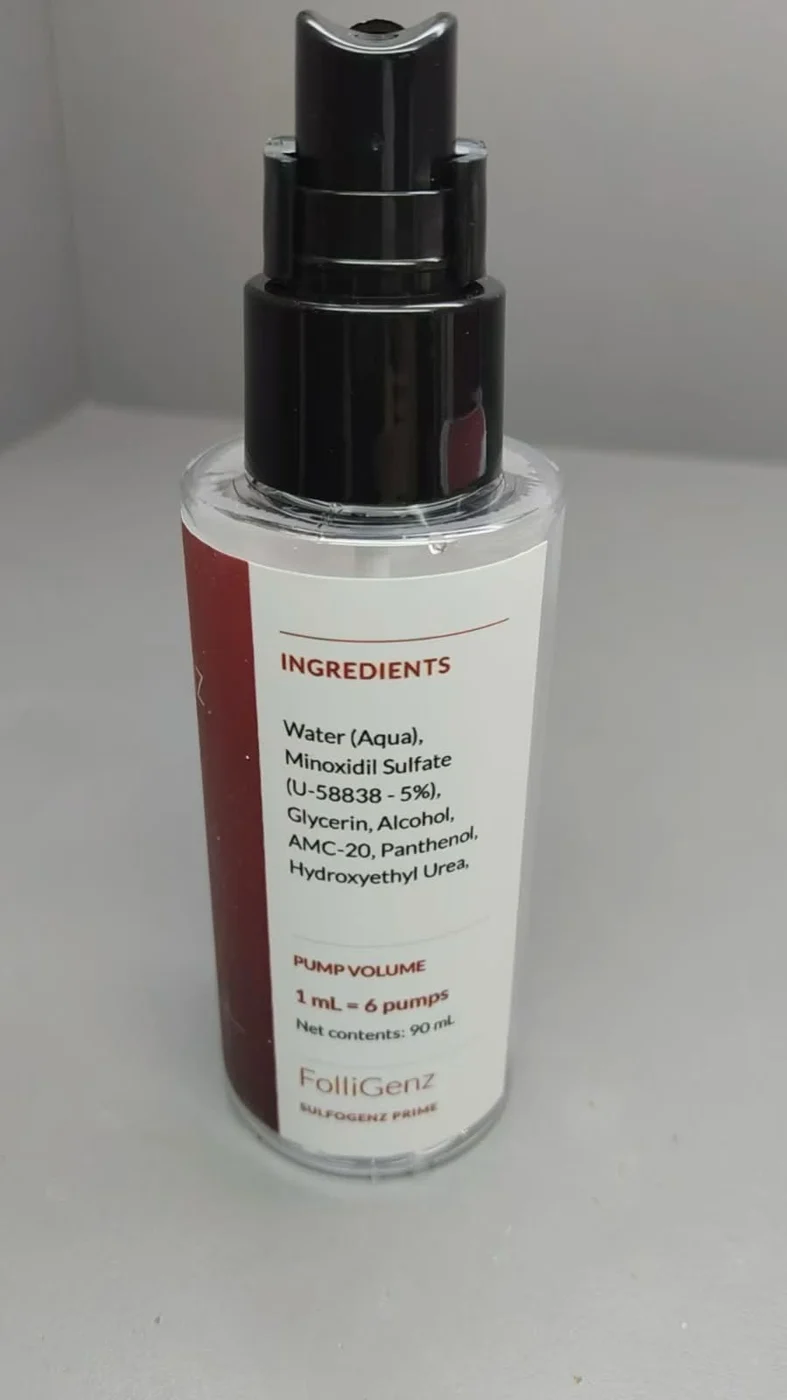
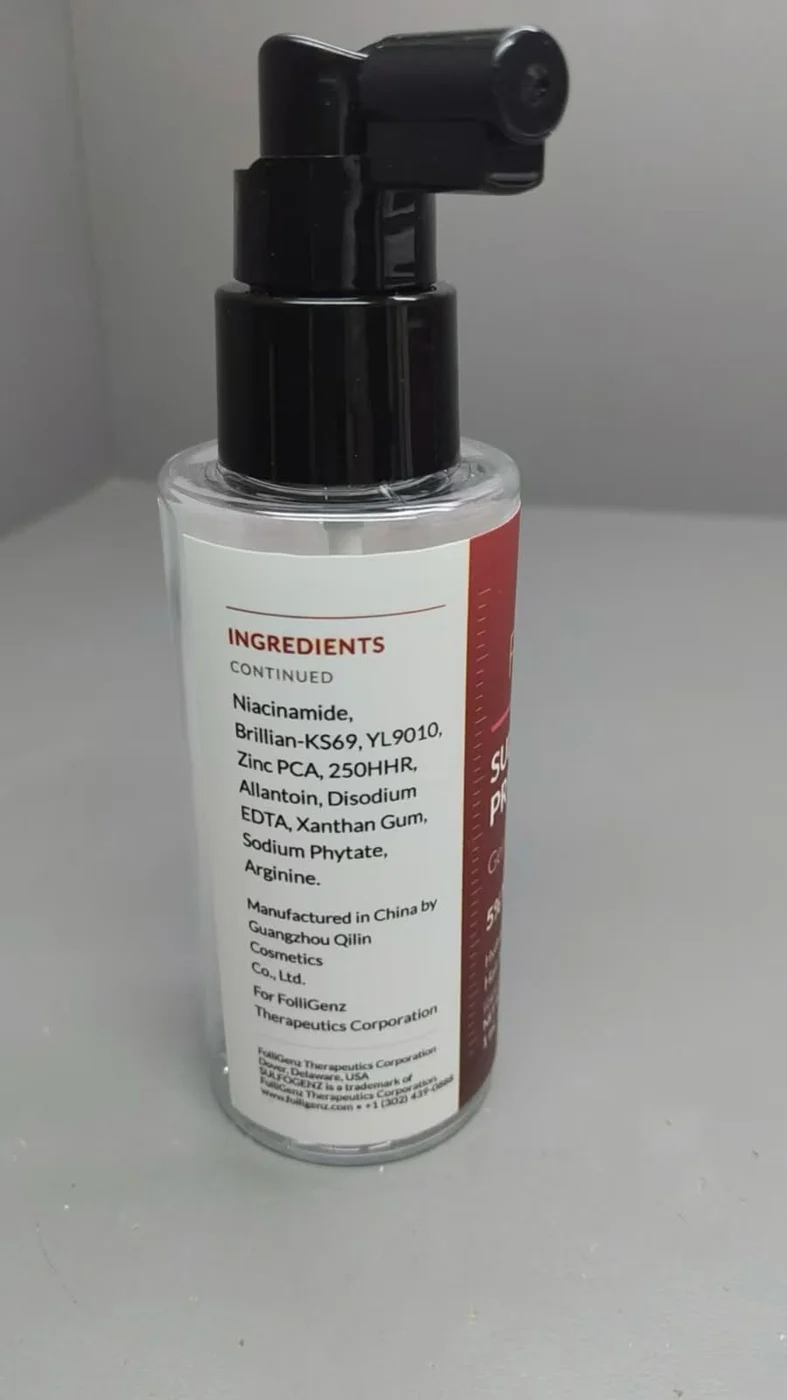
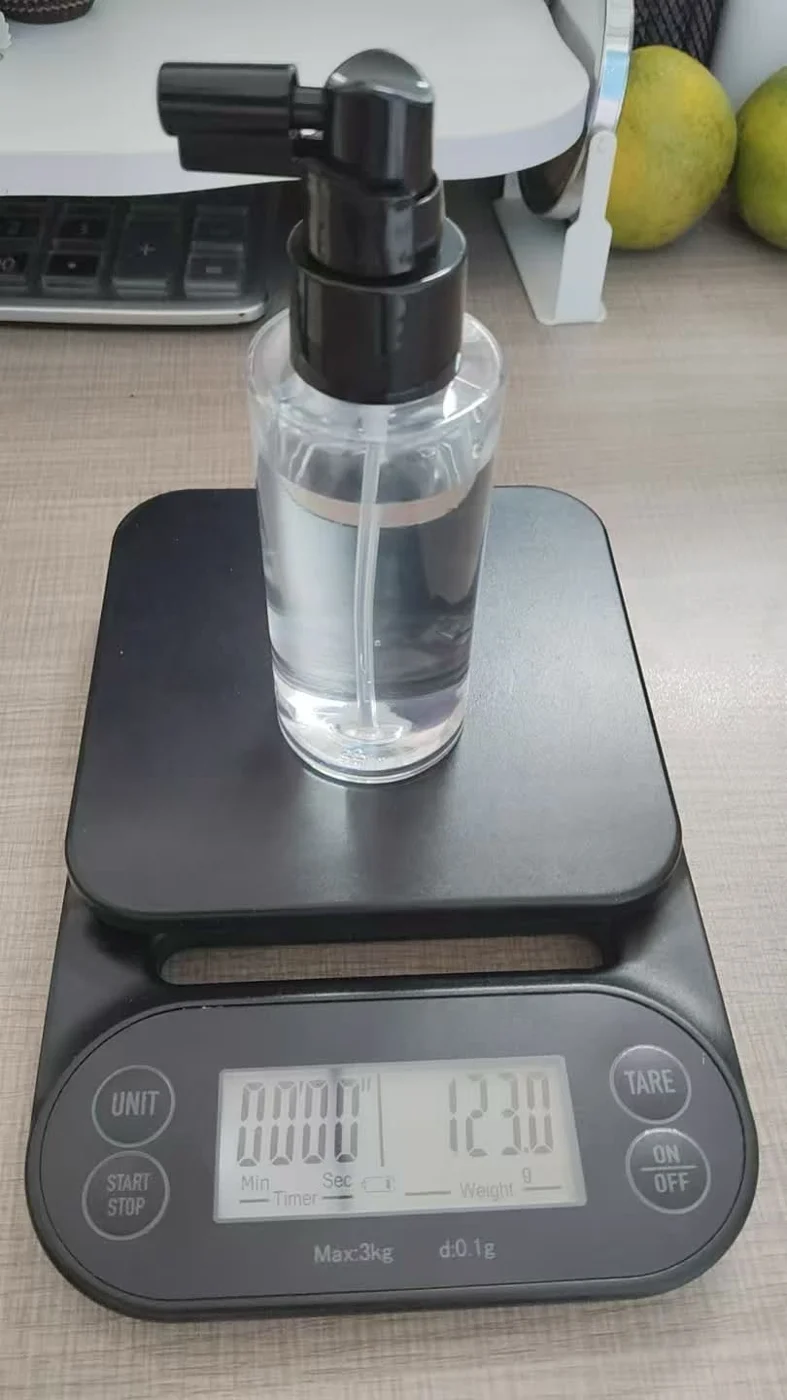
For us, this is the worthwhile direction: build on minoxidil’s biology, work directly with its active sulfate and give the vehicle the attention it deserves. Prime Ruby brings that thinking into a hydrated gel emulsion designed around stability, distribution, delivery and the feel of application.
Why the human sulfate reports are worth reading
The interest in direct sulfate delivery also reaches clinical practice. In “Efficacy, Tolerability, and Superiority of Propylene Glycol-Free, North American Witch-Hazel (Hamamelis virginiana)-Based Solution of 5% Minoxidil Sulfate for the Treatment of Female Androgenetic Alopecia,” Trüeb (2023) described 50 women who had not responded to at least six months of conventional 5% topical minoxidil. After a switch to a 5% sulfate formulation in a propylene-glycol-free vehicle, the report described improvement on photographs and dermoscopy, along with favorable tolerability. Dermoscopy is a magnified examination of the scalp and hair. https://doi.org/10.4103/ijt.ijt_55_22
That is an encouraging observation for people interested in the next question after an unsatisfactory response. This was a retrospective series, meaning the author looked back at treated patients, without a simultaneous control group. Both the active form and the vehicle changed, so the report speaks to the treatment change as a whole.
Dias et al. (2018) also discussed Chang, Hagel and Trüeb’s 2017 poster, “Sucessful treatment of androgenetic alopecia patients refractory to topical 5% minoxidil with 10% minoxidil sulphate solution.” The letter reports improvement in 97.7% of 44 patients over an average 4.09 months, with irritation, redness or folliculitis in 6.8%. Those figures come from the citing letter; the original poster was unavailable. This was another uncontrolled report, and the concentration changed as well as the active form. https://doi.org/10.1159/000488011
The reason to keep reading this research is straightforward: direct minoxidil sulfate delivery offers a biologically sensible avenue to explore, with encouraging human observations alongside the carrier research. The active and the formulation deserve to be considered together.
Why we are building on minoxidil sulfate
Diazoxide needs more than an interesting drug-class label to make a persuasive case as a scalp treatment. It missed a significant hair-protein response in Buhl’s experiment, ran into a solubility ceiling, and reached the macaque scalp in an unusually alkaline, solvent-heavy vehicle. Its positive findings are worth understanding, but they do not make that combination an attractive upgrade.
Minoxidil sulfate gives us a clearer formulation direction: the active metabolite, a well-defined reason to consider direct delivery, and research showing how carriers can influence follicular retention. Folligenz’s answer is to keep developing that idea through Sulfogenz Prime Ruby’s hydrated gel emulsion, with the active ingredient and the application experience considered together.
Read further
The studies behind the story
Want to follow a particular finding? This table separates cell experiments, follicle studies, animal work and human reports so you can see what each paper tested. The references below link to the sources.
| Source | Model | What it tells us |
|---|---|---|
| Scomoroscenco et al. (2021) | Curcumin formulations, artificial membrane and cultured skin cells | Polymer choice altered flow and delivery in curcumin gel microemulsions, illustrating practical vehicle-development principles. |
| Buhl et al. (1993) | Mouse follicles and epithelial cells | Minoxidil and its sulfate did not produce measurable rubidium efflux in these experiments. Channel evidence is model-dependent. |
| Nakaya et al. (1994) | Cultured human follicular cells | Neither drug activated the calcium-sensitive channels recorded in this culture model. |
| Shorter et al. (2008) | Human follicles and follicular cell populations | Kir6.1/SUR2B and Kir6.2/SUR1 occupy different compartments. Minoxidil helped maintain anagen under selected culture conditions. |
| Harmon, Lutz and Ducote (1993) | Mouse epidermal cells and whole vibrissae | Diazoxide did stimulate follicular DNA synthesis. Its reported EC50 was lower than minoxidil's in this assay. |
| Li et al. (2001) | Cultured human dermal papilla cells | Adenosine-receptor blockers inhibited calcium and VEGF responses; SUR2B was detected. A proposed signaling mechanism. |
| Johnson, Baker and Knight (1992) | Normal human epidermal keratinocytes | Differentiation changed minoxidil sulfotransferase activity. Supports the local metabolic rationale. |
| Uno, Kemnitz, Cappas, Adachi, Sakuma and Kamoda (1990) | Five diazoxide-treated macaques and two vehicle controls | All five treated animals improved during 16 months. Alkaline vehicle confirmed; no reported monitored systemic abnormalities. |
| Uno, Cappas and Brigham (1987) | 18-animal programme with 5% and 2% minoxidil | Dose-related growth and long follow-up, with regression after withdrawal. Not a head-to-head diazoxide trial. |
| Buhl et al. (1992) | Mouse vibrissae; separate macaque experiments | Figure 2: diazoxide alone among the tested opener comparators lacked significant stimulation of hair-shaft cysteine incorporation at tested doses. |
| Shan et al. (2025) | Rat skin diffusion and rat alopecia model | Phospholipid liposomes enhanced follicular accumulation and improved regrowth in a rat alopecia model; the authors also reported reduced irritation and sensitization. |
| Trüeb (2023) | Retrospective series of 50 women | Improvement after a switch to sulfate and a different vehicle. Uncontrolled, with a text/table percentage inconsistency. |
| Dias, Miot, Trüeb and Ramos (2018) | Letter discussing formulation and prior clinical reports | Warns about aqueous sulfate stability and penetration; cites the 2017 poster. |
| Chang, Hagel and Trüeb (2017) | Reported retrospective cohort of 44 prior nonresponders | A positive switch-to-sulfate report, confounded by concentration and treatment changes. URL is the citing letter, not the poster. |
More original study figures
References supplied for this article
- Scomoroscenco et al. (2021). Novel Gel Microemulsion as Topical Drug Delivery System for Curcumin in Dermatocosmetics. Pharmaceutics 13(4):505.Full paper reviewed.https://doi.org/10.3390/pharmaceutics13040505
- Buhl et al. (1993). Potassium Channel Conductance as a Control Mechanism in Hair Follicles. Journal of Investigative Dermatology 101(1 Suppl):148S-152S.Full paper reviewed.https://doi.org/10.1111/1523-1747.ep12363290
- Nakaya et al. (1994). Effect of minoxidil sulfate and pinacidil on single potassium channel current in cultured human outer root sheath cells and dermal papilla cells. Journal of Dermatological Science 7 Suppl:S104-S108.Full paper reviewed.https://doi.org/10.1016/0923-1811(94)90041-8
- Shorter et al. (2008). Human hair follicles contain two forms of ATP-sensitive potassium channels, only one of which is sensitive to minoxidil. The FASEB Journal 22:1725-1736.Full paper reviewed.https://doi.org/10.1096/fj.07-099424
- Harmon, Lutz and Ducote (1993). Potassium Channel Openers Stimulate DNA Synthesis in Mouse Epidermal Keratinocyte and Whole Hair Follicle Cultures. Skin Pharmacology 6:170-178.Full scanned paper reviewed with OCR.https://doi.org/10.1159/000211131
- Li et al. (2001). Minoxidil-Induced Hair Growth is Mediated by Adenosine in Cultured Dermal Papilla Cells: Possible Involvement of Sulfonylurea Receptor 2B as a Target of Minoxidil. Journal of Investigative Dermatology 117:1594-1600.Full paper reviewed.https://doi.org/10.1046/j.0022-202x.2001.01570.x
- Johnson, Baker and Knight (1992). Minoxidil Sulfotransferase, a Marker of Human Keratinocyte Differentiation. Journal of Investigative Dermatology 98:730-733.Full scanned paper reviewed with OCR.https://doi.org/10.1111/1523-1747.ep12499930
- Uno, Kemnitz, Cappas, Adachi, Sakuma and Kamoda (1990). The effects of topical diazoxide on hair follicular growth and physiology of the stumptailed macaque. Journal of Dermatological Science 1:183-194.Full paper reviewed.https://doi.org/10.1016/0923-1811(90)90130-6
- Uno, Cappas and Brigham (1987). Action of topical minoxidil in the bald stump-tailed macaque. Journal of the American Academy of Dermatology 16(3 Pt 2):657-668.Full paper reviewed.https://doi.org/10.1016/S0190-9622(87)70084-X
- Buhl et al. (1992). Potassium Channel Conductance: A Mechanism Affecting Hair Growth both In Vitro and In Vivo. Journal of Investigative Dermatology 98:315-319.Full scanned paper reviewed with OCR.https://doi.org/10.1111/1523-1747.ep12499788
- Shan et al. (2025). Liposomes enhance the hair follicle delivery of minoxidil sulfate with improved treatment of androgenic alopecia. International Journal of Pharmaceutics 677:125642.Abstract, introduction and saved publisher snippets only.https://doi.org/10.1016/j.ijpharm.2025.125642
- Trüeb (2023). Efficacy, Tolerability, and Superiority of Propylene Glycol-Free, North American Witch-Hazel (Hamamelis virginiana)-Based Solution of 5% Minoxidil Sulfate for the Treatment of Female Androgenetic Alopecia. International Journal of Trichology 15(3):108-112.Full paper reviewed.https://doi.org/10.4103/ijt.ijt_55_22
- Dias, Miot, Trüeb and Ramos (2018). Use of Minoxidil Sulfate versus Minoxidil Base in Androgenetic Alopecia Treatment: Friend or Foe?. Skin Appendage Disorders 4:349-350.Full letter reviewed; supplied as 000488011.pdf.https://doi.org/10.1159/000488011
- Chang, Hagel and Trüeb (2017). Sucessful treatment of androgenetic alopecia patients refractory to topical 5% minoxidil with 10% minoxidil sulphate solution. Poster, 26th EADV Congress, Geneva, 13-17 September 2017. Original title spelling retained.Original poster unavailable; citation and findings checked in Dias et al., reference 9.https://doi.org/10.1159/000488011
Additional sources checked
- Goren et al. (2014). Novel enzymatic assay predicts minoxidil response in the treatment of androgenetic alopecia. Dermatologic Therapy 27:171-173. Abstract reviewed.https://pubmed.ncbi.nlm.nih.gov/24283387/
- Diazoxide Oral Suspension, USP. Authoritative DailyMed drug label, description and clinical pharmacology. Oral pharmacology, not proof of effects from the studied scalp formulation.https://dailymed.nlm.nih.gov/dailymed/getFile.cfm?setid=c0237320-2d3f-4907-a4d3-08f138aa4ca8
- Mauro et al. (1998). Barrier recovery is impeded at neutral pH, independent of ionic effects: implications for extracellular lipid processing. Experimental barrier research, not the Uno vehicle.https://pubmed.ncbi.nlm.nih.gov/9617442/
- Vollmer et al. (1994). A Study of the Percutaneous Absorption-enhancing Effects of Cyclodextrin Derivatives in Rats. Checked to resolve a secondary-source misattribution: this paper studied liarozole, not diazoxide.https://doi.org/10.1111/j.2042-7158.1994.tb03713.x
Additional reading on alcohol exposure
- García-Gavín et al. (2011). Allergic contact dermatitis caused by isopropyl alcohol: a missed allergen? Contact Dermatitis 65(2):101-106. Selected patch-test patients; abstract reviewed.https://pubmed.ncbi.nlm.nih.gov/21679194/
- Cartner et al. (2017). Effect of different alcohols on stratum corneum kallikrein 5 and phospholipase A2 together with epidermal keratinocytes and skin irritation. International Journal of Cosmetic Science 39(2):188-196. Laboratory and frequent forearm-exposure experiments; abstract and publisher text reviewed.https://doi.org/10.1111/ics.12364
Published by Folligenz, the company behind Sulfogenz Prime Ruby. This article discusses research and formulation development and includes a product link. Historical study recipes and doses are background information, not instructions for mixing or using a treatment.